

Undergraduate
BA (Hons) Marketing – Dual Degree
Awarded by: Manchester Metropolitan University

School & Faculty
Summary
Vietnam is facing growing opportunities to host international sporting events. In a global context, however, the ability to deliver events in a sustainable way is increasingly becoming a key criterion for destinations seeking long-term relevance and credibility.

Stay up to date
Our website uses cookies to enhance your user experience and improve the effectiveness of our marketing activities. By clicking “Accept” or closing this window to continue browsing, you consent to our use of all cookies. If you do not agree to all cookies, please select “Manage cookies”. Learn more about our Privacy Policy and Cookie Policy for full details.
In recent years, Vietnam has appeared more frequently on the regional sporting events map, from hosting the SEA Games to large-scale international marathons in Hanoi and Ho Chi Minh City, alongside the rapid growth of sport-tourism-linked events such as golf, triathlon and esports.
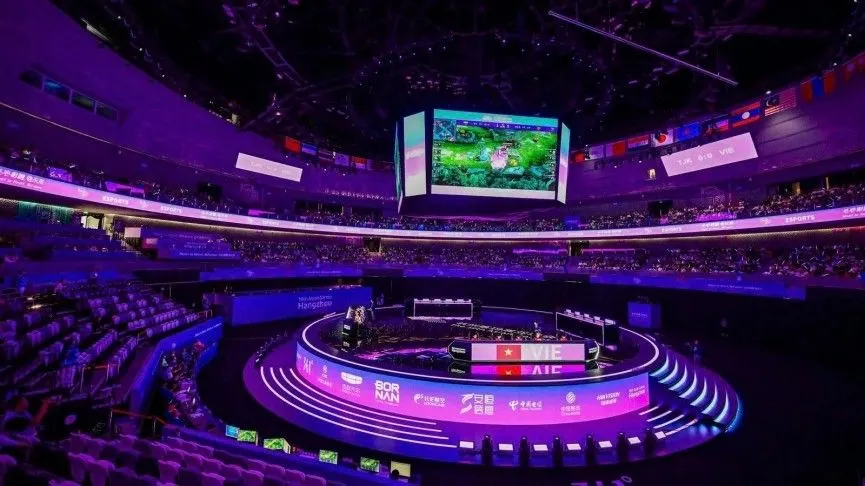
As scale increases, expectations around how sporting events are delivered are also shifting. Audiences, sponsors and sports organisations are paying closer attention not only to event experience, but also to long-term impact. A survey published by ITE HCMC shows that 96% of Vietnamese travellers consider sustainability an important factor in their travel decisions, signalling rising expectations around environmental and social responsibility within the events sector.
According to Tristan Niesslein, ESG Director and Founder of Niesslein Sustainability Partners (NSP) – a sustainability consultancy working across global sport – sustainability is no longer an optional add-on for major sporting events.
“Global sporting events now operate in a context where climate responsibility, social value creation and transparent governance are expected as standard. Sustainability is no longer a choice; it has become a competitive and operational requirement,” Tristan said.
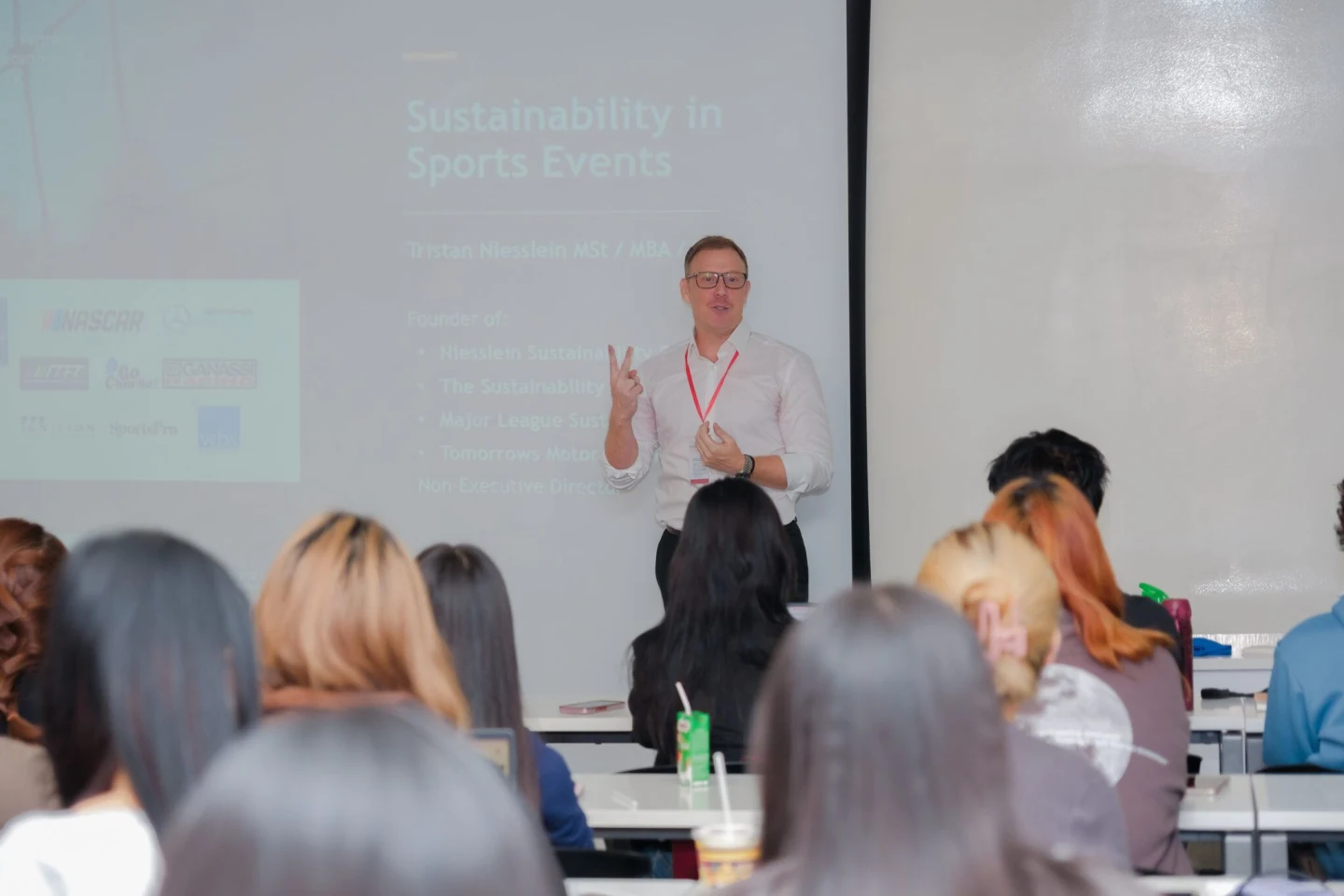
Based on his experience working with organisations such as Arsenal FC, Mercedes AMG Petronas Formula One Team and The World Surf League, Tristan highlights a clear shift from policy commitments to operational practice.
At Arsenal, sustainability is embedded across club-wide decision-making, from travel policies to operational efficiency and community programmes. Mercedes AMG Petronas F1 approaches sustainability with the same level of engineering precision applied to on-track performance, using data-driven strategies to optimise energy use, logistics, and circular materials.
For emerging markets such as Vietnam, Tristan believes the country is at a pivotal moment. Rather than following outdated, resource-intensive models, Vietnam has the opportunity to integrate modern sustainability practices directly into its development pathway, aligned with its national commitment to net-zero emissions by 2050.
Practical starting points, he notes, can include measures such as energy-efficient equipment, reducing unnecessary materials, replacing single-use plastics, improving waste segregation, and providing water refill stations for athletes and spectators – actions that deliver immediate environmental and cost benefits.
As sustainability becomes a global standard in event delivery, Vietnam faces the challenge of strengthening its implementation capacity. According to Dr Vladimir Antchak, Discipline Lead for Hospitality, Tourism and Event Management at British University Vietnam (BUV), the primary barrier is not financial.
“International experience shows that expertise and long-term vision are the decisive factors in delivering sustainable events. While cost is often perceived as the main obstacle, integrating sustainable practices from the outset can significantly reduce costs over time,” Vladimir said.
In this context, workforce development becomes critical. Sustainability is no longer an additional skill, but an emerging core professional competency for event managers.
Vladimir notes that Vietnamese students gain a clear advantage when exposed to sustainability thinking early. Amid a shortage of skilled professionals in the events industry, graduates who can connect environmental objectives with operational realities are increasingly valued, with stronger access to career opportunities and higher earning potential in a fast-growing sector.
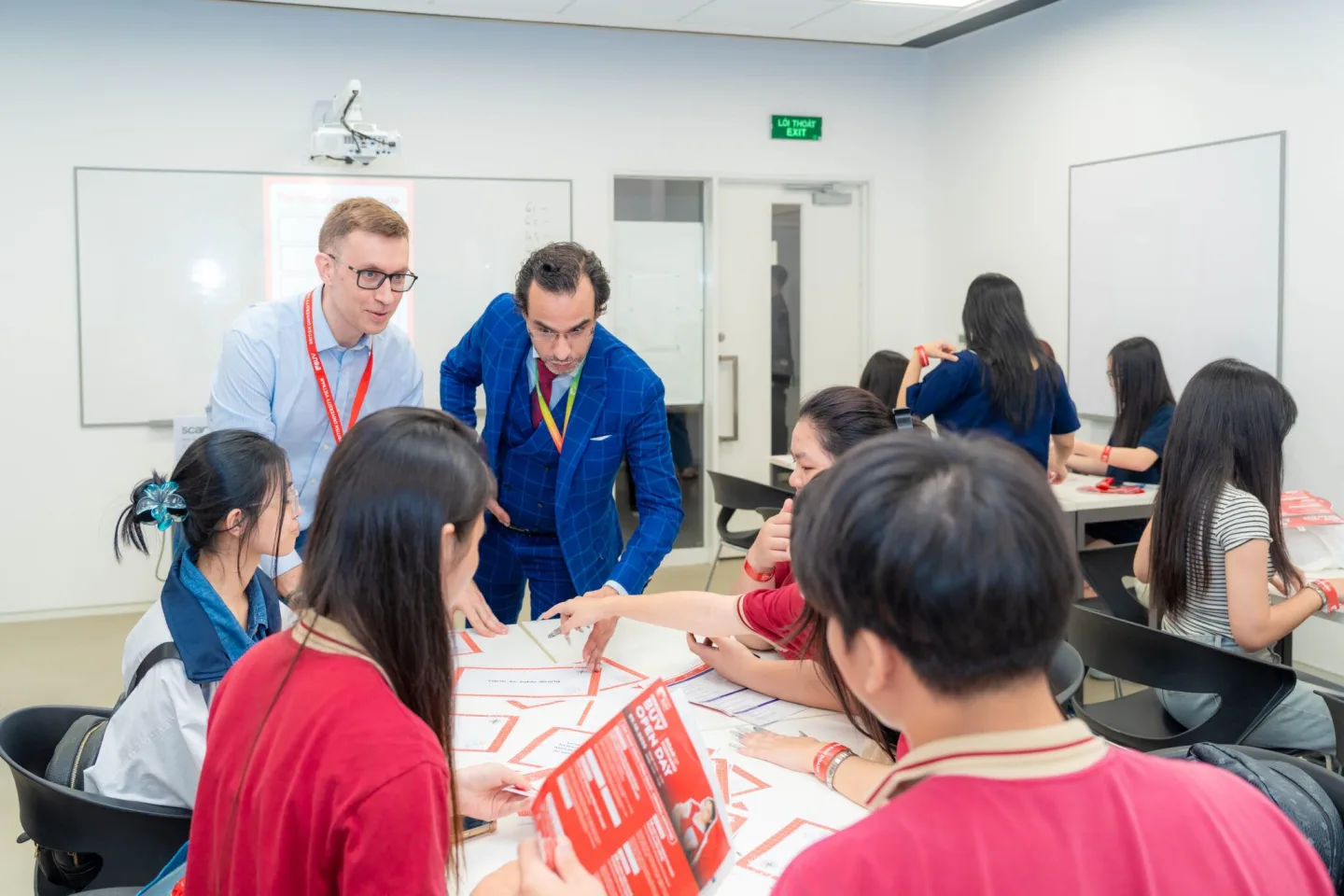
At BUV, sustainability is embedded throughout the Event Management programme, rather than taught as a standalone topic. Students engage with international standards such as ISO 20121, green supply-chain principles and environmental and social impact measurement, applying these frameworks across a range of live event projects.
Experts agree that as competition between destinations intensifies, the ability to deliver sustainable sporting events – and sustainable events more broadly – will become a decisive competitive advantage. For Vietnam, sustainability is not only an environmental consideration, but a pathway to strengthening its position on the global events map through higher-quality delivery and future-ready human capital.
Undergraduate
Pathways
Pathways
Postgraduate
Postgraduate
Postgraduate
MORE TO EXPLORE


