Choosing a university means trying to imagine an unfamiliar next chapter. Meeting the people who will teach you can make it feel a little less distant.
Our website uses cookies to enhance your user experience and improve the effectiveness of our marketing activities. By clicking “Accept” or closing this window to continue browsing, you consent to our use of all cookies. If you do not agree to all cookies, please select “Manage cookies”. Learn more about our Privacy Policy and Cookie Policy for full details.
For families choosing a university, information about qualifications and future opportunities is essential. But behind the practical questions is a more personal concern: who will be there to guide a young person when the work becomes difficult, and the future still feels uncertain?
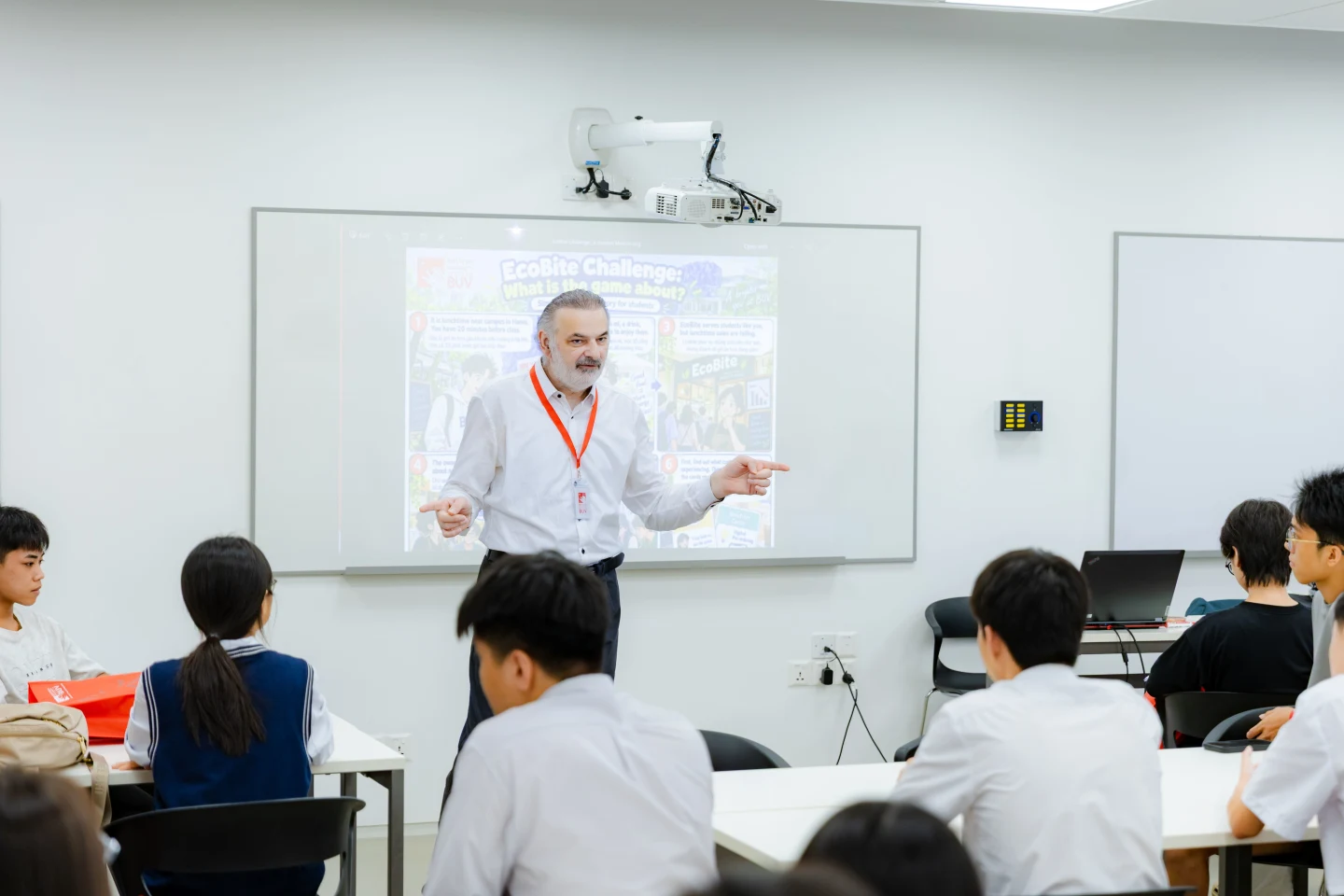
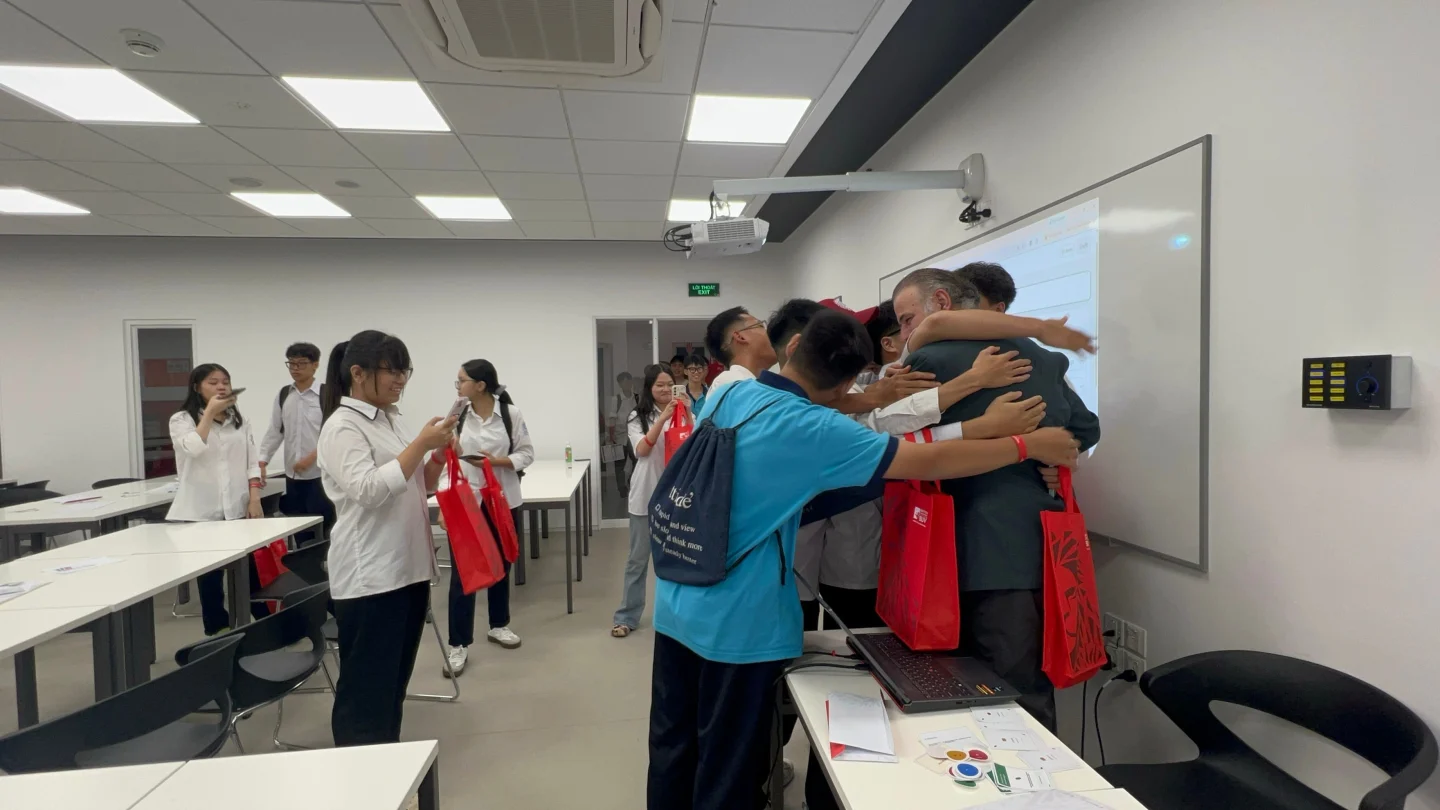
At a recent Open Day at British University Vietnam (BUV), that conversation continued beyond the end of a session. After exploring business, technology and innovation with lecturer Omar Al-Doori, a group of prospective students gathered around him in a spontaneous embrace.
Al-Doori, a Teaching Fellow at BUV’s School of Computing & Innovative Technologies, drew on academic and industry experience to lead the demo session on BSc (Hons) Digital Business and Technology Innovation, dually awarded by Manchester Metropolitan University and BUV. The students’ response gave the session an unexpected ending. It also brought into focus something important about the encounter itself: introducing a subject is an opportunity to help a young person find a way into it.
Begin with a problem, not a computer
The demo session starts with a question: how can technology help an organisation solve a problem?
Before choosing a digital tool, students need to understand what needs to change, whose experience could be improved, and what evidence would support a useful solution.
Consider the digital payment process. Making it faster may seem like an obvious improvement. But what if customers find it confusing, mistakes become harder to resolve or security is compromised? Understanding the problem means looking beyond speed to the experience of the people using the service.
A process that works well for a business may still be difficult for a customer. A new system may require staff to learn different ways of working. Using data more effectively also brings responsibilities around privacy.
These questions give technical learning a recognisable purpose. Students are asked to consider the people affected by a solution as well as the solution itself.
For someone encountering the field for the first time, a familiar problem provides a place to begin. They do not need to know every technical term before they have something worthwhile to ask.
Taking questions seriously
A lecturer brings knowledge into the classroom. Real teaching lies in helping someone else understand it.
Industry experience can show why a subject matters in practice. Academic experience helps make that understanding accessible, while preserving the complexity students need to engage with.
This is intellectual generosity: making demanding ideas approachable without diminishing their depth.
It does not mean making university seem effortless. Students will encounter concepts they do not understand immediately. They will need to revise their work, reconsider an assumption, and sometimes begin again. Encouragement matters because it helps them remain engaged with that process.
This programme combines case studies, practical exercises, and projects to help students apply their knowledge. Its curriculum is designed to develop skills in mapping business processes, creating digital prototypes and using data to support decisions. Students also examine the ethical implications of their choices and the challenges of introducing change within an organisation.
These details help families understand the education behind the qualification. They connect possible early-career routes, including business analysis, data reporting, digital operations and project coordination, with the learning needed to approach them.
Yet the content of a programme is only part of the relationship. How a lecturer receives a question matters too, particularly when the person asking is still finding the confidence to speak.
Young people should not have to sound like experts before their curiosity deserves attention.
A welcome that continues
The students who gathered around Al-Doori expressed their response openly. Others may show engagement more quietly, through a question after a session or an interest they continue to explore at home. Their questions deserve the same care.
The responsibility of a university is to carry that attention beyond the first visit.
It becomes especially important when the excitement of beginning gives way to the demands of study. A student may need help understanding feedback or working through a difficult assignment. They may need reassurance that not understanding something yet is a reason to ask, rather than a reason to withdraw.
A thoughtful response can help them take the next step without taking away their responsibility to do the work.
For parents, this is part of what makes university choice so personal. They want their child to become more independent, while knowing there will be people who take their development seriously. For students, it is an opportunity to grow into that independence with guidance they can use.
The Open Day moment at BUV brings this responsibility into focus. The academic and industry experience behind a programme matters most when it reaches the student, when it helps them understand a difficult idea, ask a better question or make a more informed judgement of their own.
Families need reliable information when choosing a university. They also need opportunities to meet its lecturers and understand how learning will be supported. The qualification and the people behind it belong in the same conversation.
A university can introduce young people to a field they have not yet studied. Its deeper task is to help them see a place for themselves within it, while being clear about the work that lies ahead.
The embrace lasted a moment. The trust that can begin in moments like it deserves to be honoured long afterwards.
About BSc (Hons) Digital Business and Technology Innovation:
The dual-degree programme combines the BSc (Hons) Digital Business and Technology Innovation, awarded by Manchester Metropolitan University in the UK, with the Bachelor of Business Technology, awarded by BUV. Students receive both qualifications when they fulfil the requirements for both awards. For further information, kindly refer to our programme page here.