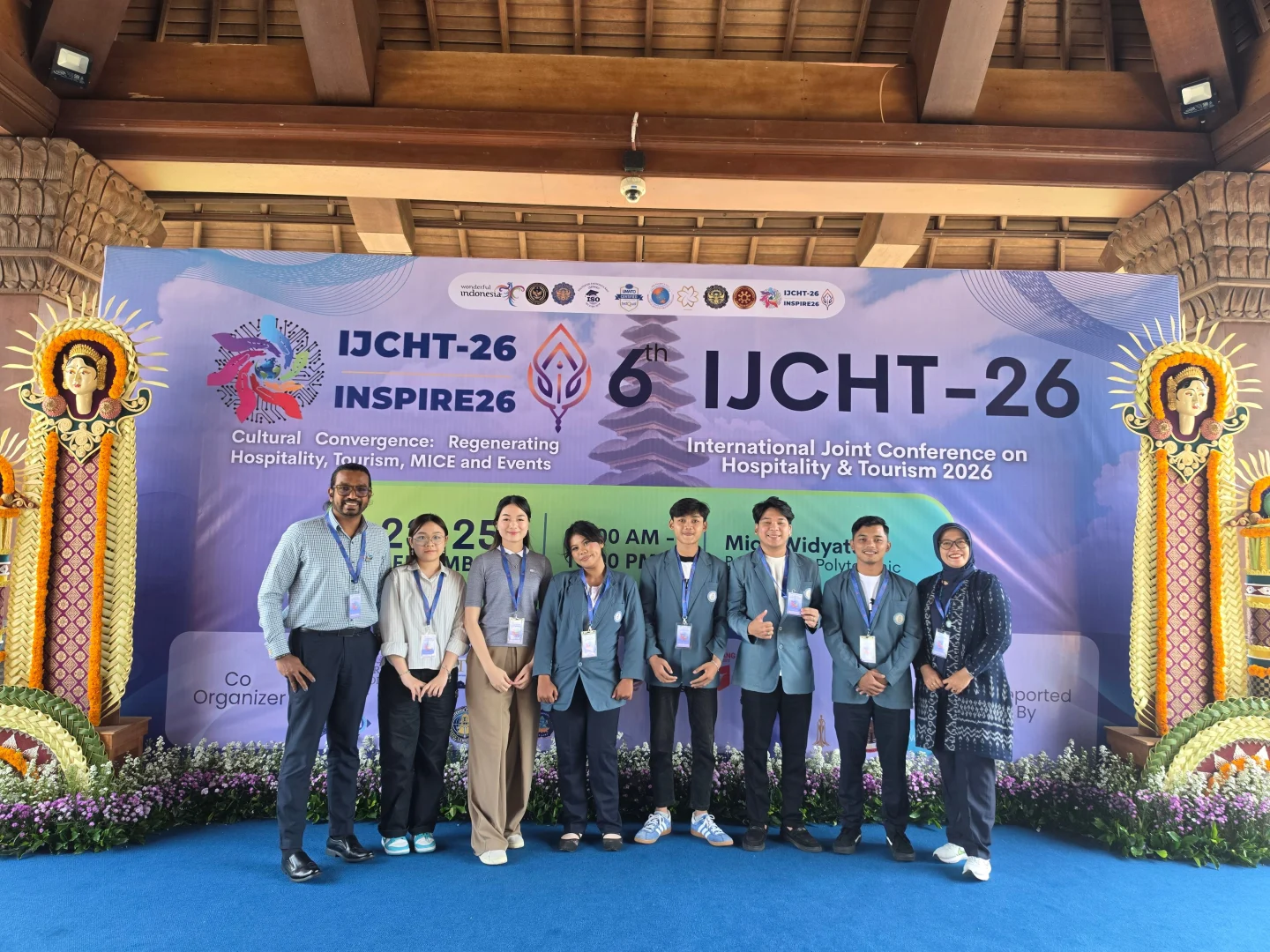
What does it take to preserve the authenticity of Hanoi’s street food heritage in a rapidly changing city? For four Tourism Management students at British University Vietnam (BUV), the question became the starting point of an academic research journey that led them to win the Best Research Paper Award at the International Conference on Hospitality and Tourism (IJCHT) 2026 in Bali, Indonesia.
The research was conducted by Nguyen Bao Ngoc, Nguyen Van Quyen, Luu Nguyen Ha My and Nguyen Minh Tri, titled “The Sustenance Paradox: Professionalization, Authenticity, and Sustainability in Hanoi’s Street Food Heritage,” explores the complex relationship between professional training, cultural authenticity and the long-term sustainability of Hanoi’s traditional street food culture. Through interviews with established restaurant owners in Hanoi’s Old Quarter and students studying hospitality-related disciplines, the team examined whether a more professionally trained generation could contribute to preserving the heritage of traditional street food.
For the students, the award marked not only the recognition of their research, but also a meaningful step into the world of academic inquiry.
Exploring the Paradox of Preserving Culinary Heritage
Hanoi’s Old Quarter is renowned for its long-standing culinary traditions, where generations of family-run eateries have helped shape the city’s cultural identity. However, as the city continues to modernise and food businesses become increasingly professionalised, questions emerge about how these traditions can be sustained.
The BUV research team sought to understand this tension by examining the perspectives of traditional restaurant owners and young people receiving professional training in hospitality and tourism.
One of the findings that surprised the students was that the continuation of family businesses was far from guaranteed. Nguyen Van Quyen had initially assumed that long-established restaurants would naturally pass their trade down to the next generation.
“Before conducting the research, I thought that the restaurants and eateries in the Old Quarter were all family businesses where the owners would pass their profession on to their children. However, after the interviews, I realised that even the owners themselves were uncertain whether their children would continue the business, despite already helping at the restaurants,” Quyen shared.
The interviews also revealed diverse and sometimes contrasting perspectives among restaurant owners, challenging the students’ initial assumption that people working in the same field would share similar views.
By engaging directly with those who sustain Hanoi’s culinary traditions, the research offered the students a deeper understanding of the challenges involved in preserving cultural heritage amid changing social and professional expectations.
From Field Interviews to an International Academic Stage
The research journey began in the students’ second year, when their lecturer, Madura, invited them to contribute to an academic project. Four students from the Tourism Management programme joined the research, taking on responsibilities ranging from data collection and interview transcription to supporting the writing of the introduction and literature review.
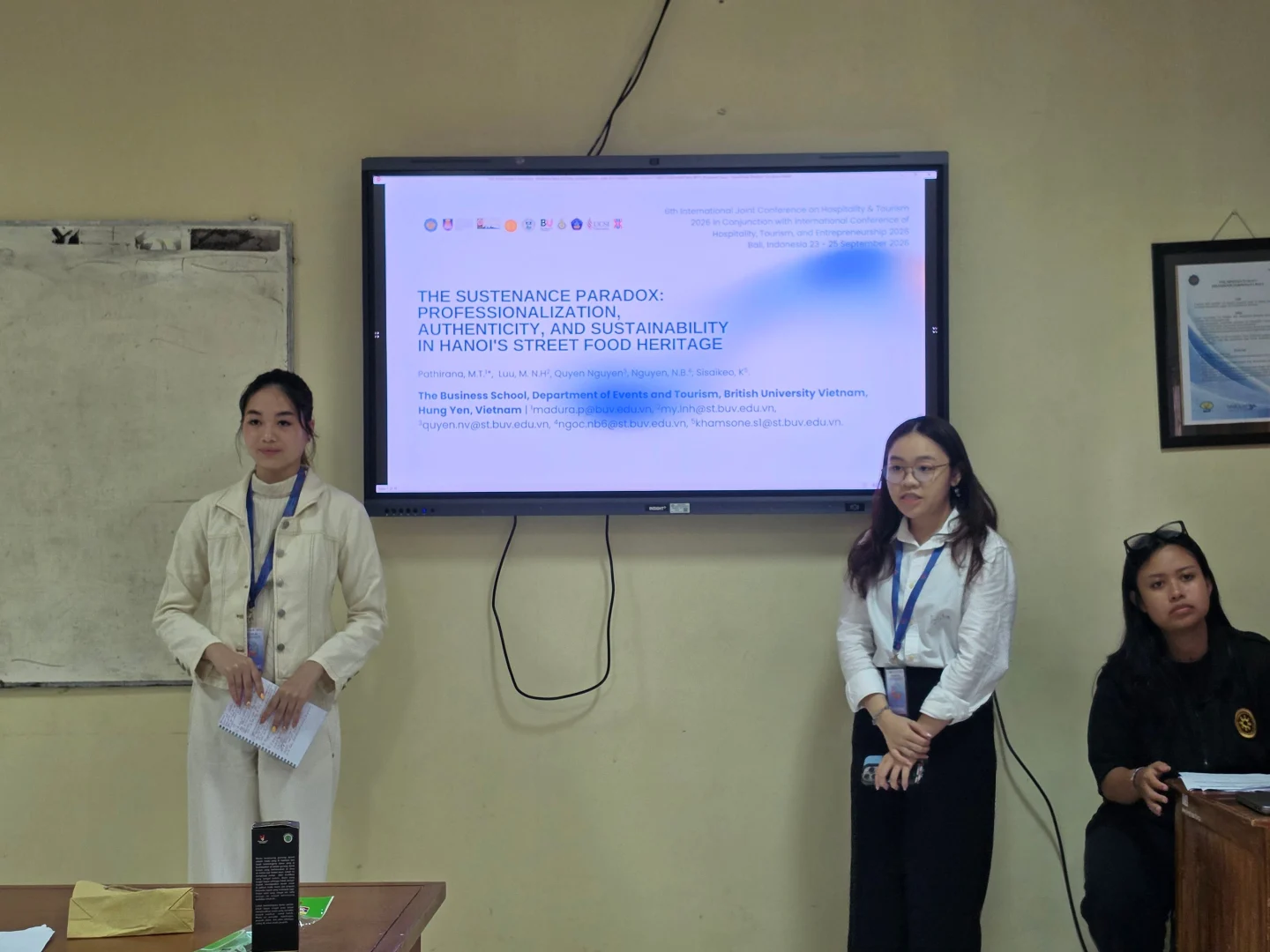
For the students, collecting primary data was one of the most memorable parts of the process. Conducting interviews with restaurant owners in Hanoi’s Old Quarter required them to step outside their comfort zones and approach people they had never met before.
Luu Nguyen Ha My, a third-year Tourism Management student who helped connect with restaurant owners and represented the group at the conference, recalled how she and Quyen initially hesitated to approach a restaurant owner for an interview.
“We were both nervous because we thought people in the Old Quarter might be quite strict, and we were worried that asking questions would disturb the restaurant owner. So, we ordered some food and thought that perhaps it would be easier to start a conversation as customers,” My recalled.
After finishing their meal, the two students finally gathered the courage to ask for an interview. The owner agreed, and her son even joked that they should have asked earlier, as they had been sitting there for quite some time.
“That was when I realised that things were not as frightening as I had imagined,” My shared.
Beyond the fieldwork, the students also faced the challenge of presenting their research at an international academic conference. For Quyen, public speaking had always been intimidating, and presenting at an international conference initially felt overwhelming.
However, recognising the opportunity as one she might not encounter again, she committed to preparing with her teammates. The group developed their presentation slides and script, seeking feedback and guidance from their lecturer, who had prior experience participating in international conferences.
At IJCHT 2026, the students had the opportunity to engage with researchers and academics from different countries, gaining new perspectives on their work and the broader field of hospitality and tourism research.
When the team received the Best Research Paper Award, the recognition came as a surprise.
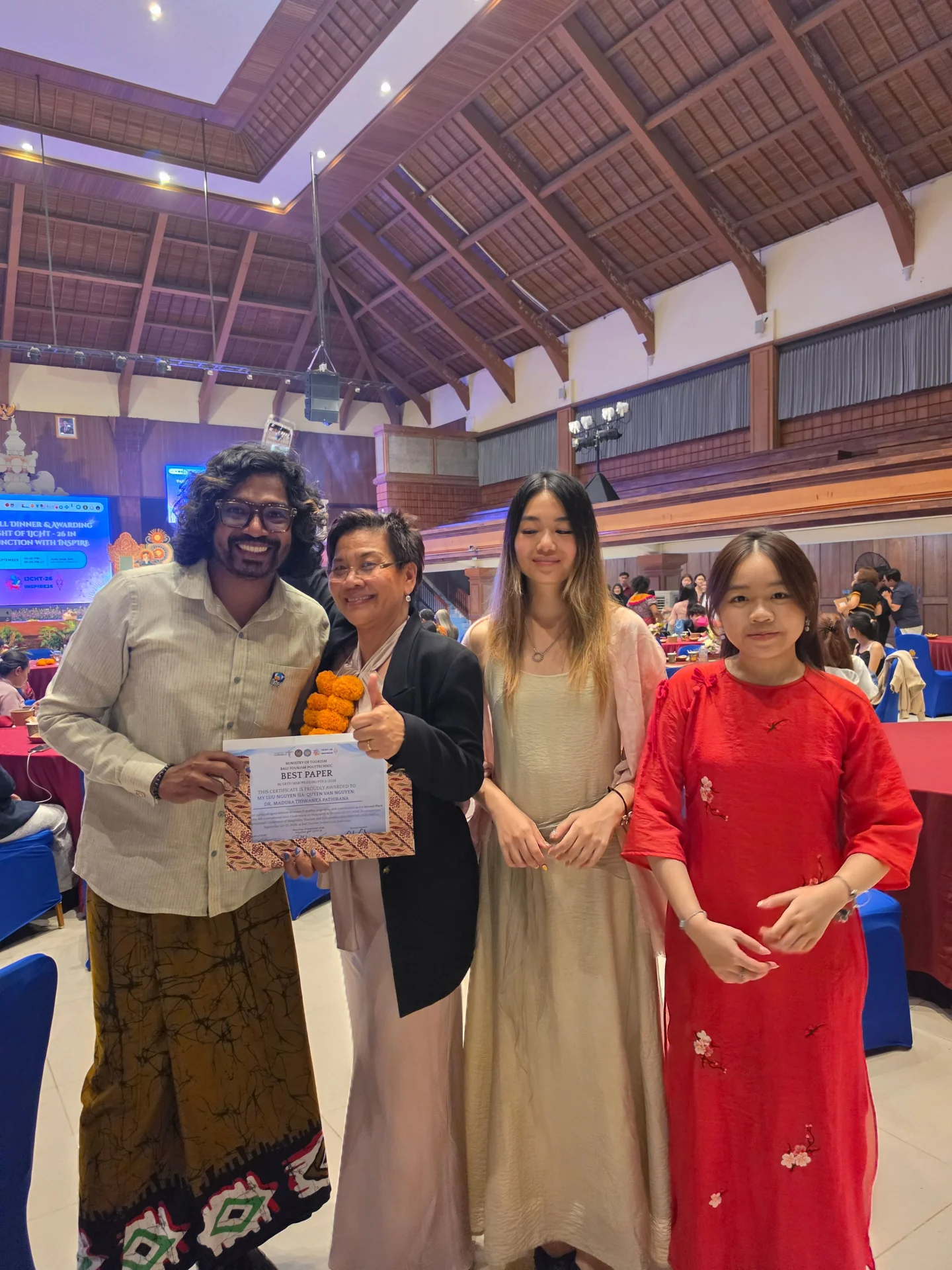
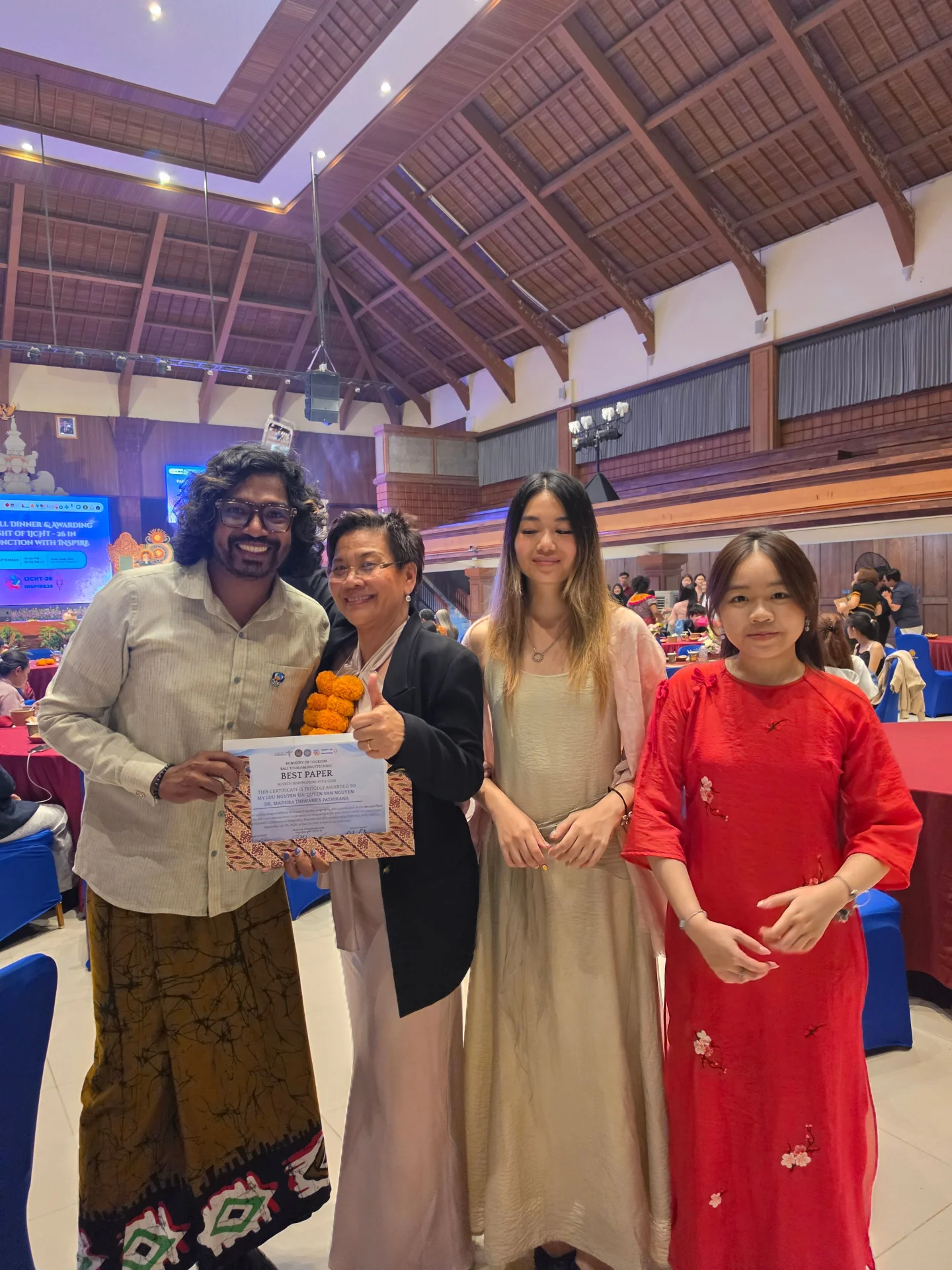
“We started the research simply because we were interested in the topic, without expecting to win an award. Receiving this recognition was a surprise and made us proud of what we had accomplished,” Quyen shared.
Learning Beyond the Classroom at BUV
The experience provided the students with an opportunity to apply their academic knowledge to a real research project, while developing skills in interviewing, data collection, academic writing, presentation and networking.
Throughout the process, the guidance of BUV lecturers played an important role in helping the students navigate the unfamiliar demands of academic research. Ha My described the support as hands-on, with lecturers providing guidance not only on research methods but also on academic pathways and the experience of participating in international conferences.
For Nguyen Bao Ngoc who contributed to data collection, interview transcription and the literature review, the experience helped make academic research feel more accessible.
“Before, I often found academic research quite abstract and distant. But after experiencing it firsthand, I no longer feel afraid or hesitant about it,” Ngoc shared.
The journey also encouraged the students to reconsider their own capabilities and future directions. For My, the experience became a way to explore whether an academic career might be a suitable path. For Quyen, it reinforced the importance of embracing unfamiliar challenges.
“I have learned that something may not be difficult; perhaps I simply have not tried it before. I want to continue trying new things to understand what I still need to improve and how I can develop,” Quyen reflected.
The team’s achievement at IJCHT 2026 reflects how opportunities to engage in research can help BUV students extend their learning beyond the classroom, explore their academic interests and contribute to conversations around the preservation of Vietnam’s cultural heritage.