BUV Supports UK–Vietnam Business Forum 2026, Advancing the Vision for a High-Value Economy
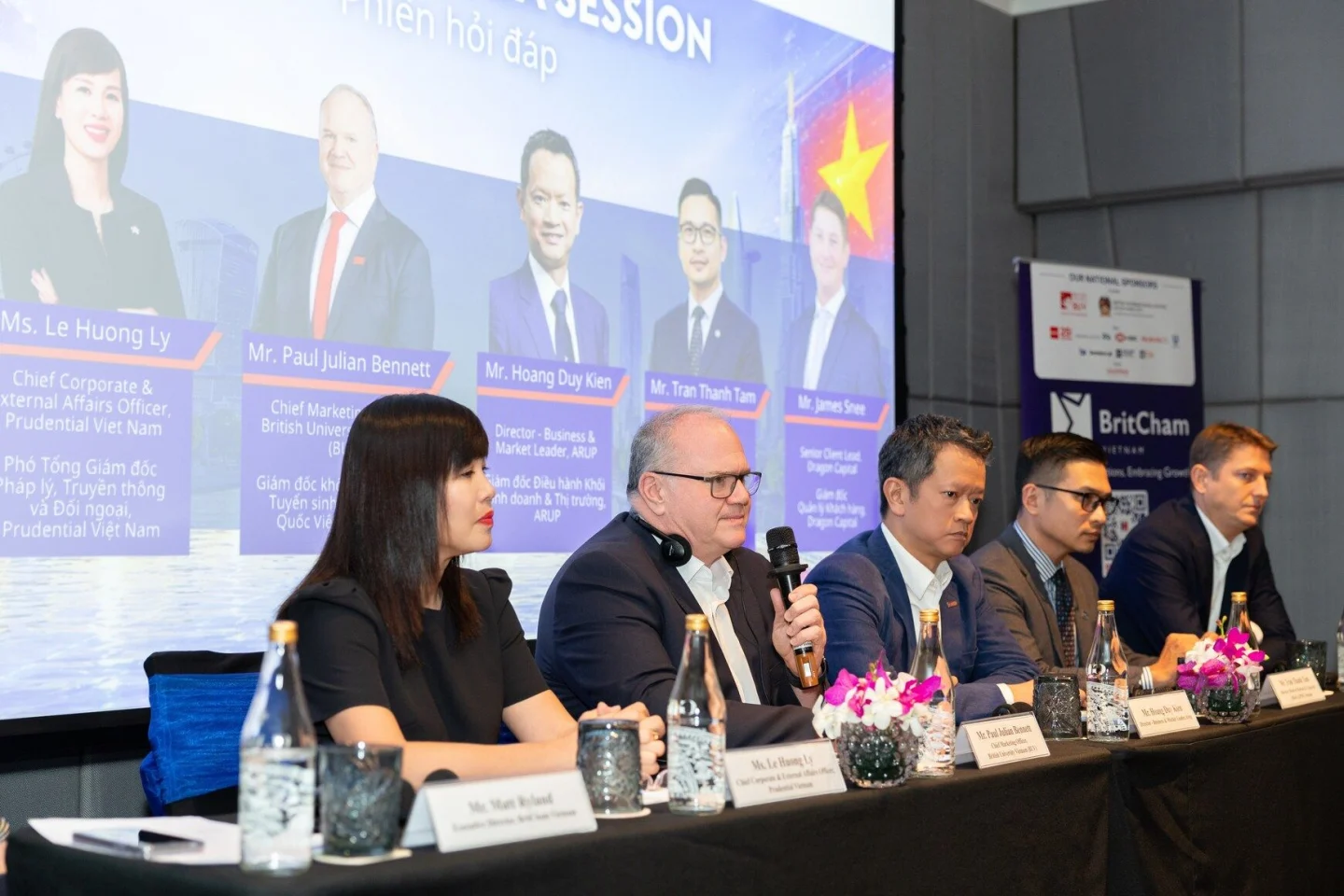
On 1 October 2026, British University Vietnam (BUV) attended the press conference announcing the UK–Vietnam Business Forum 2026, joining the British business community in promoting bilateral cooperation and contributing to Vietnam’s ambition to build a high-value, high-income economy by 2045.
Our website uses cookies to enhance your user experience and improve the effectiveness of our marketing activities. By clicking “Accept” or closing this window to continue browsing, you consent to our use of all cookies. If you do not agree to all cookies, please select “Manage cookies”. Learn more about our Privacy Policy and Cookie Policy for full details.
Organised by the British Chamber of Commerce Vietnam (BritCham Vietnam) in Ho Chi Minh City, the press conference brought together representatives from businesses, partner organisations and media agencies. The event marked the official introduction of the UK–Vietnam Business Forum 2026, BritCham’s largest annual economic dialogue event, scheduled to take place on 29 October 2026 in Ho Chi Minh City.
Strengthening UK–Vietnam Cooperation Towards Vision 2045
Under the theme “Vision 2045: Creating a High-Income, High-Value Economy”, this year’s Forum aims to strengthen trade and investment relations between the United Kingdom and Vietnam while encouraging dialogue on new drivers of economic growth, ranging from science, technology and innovation to capital market development and high-quality human resources.
At the press conference, Mr Matt Ryland, Executive Director of BritCham Vietnam, introduced the Forum’s strategic direction and key agenda priorities, highlighting the importance of bilateral cooperation in expanding trade and investment opportunities and supporting Vietnam’s long-term development ambitions.
Alongside the keynote remarks, the programme featured a media Q&A session and networking opportunities for business representatives, partner organisations and journalists, facilitating further discussion on the prospects for UK–Vietnam cooperation and the country’s economic development priorities.
The Role of Education in Building a High-Value Economy
As part of the programme, representatives from BUV, Prudential Vietnam and Unilever Vietnam shared perspectives from the education, finance and business sectors on the opportunities and challenges associated with Vietnam’s transition towards a higher-value growth model.
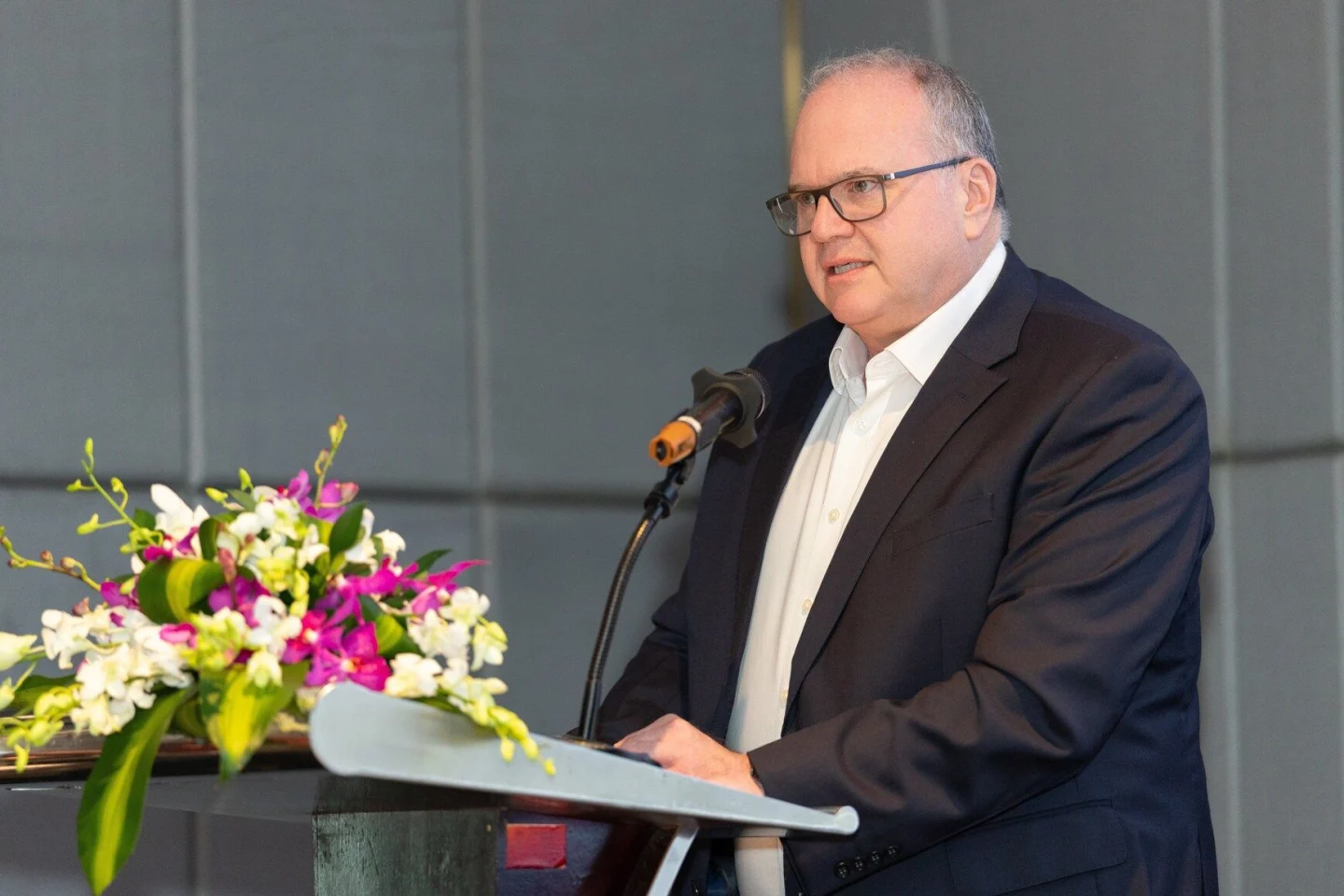
Representing the higher education sector, Mr Paul Julian Bennett, Chief Marketing and Student Recruitment Officer at BUV, shared his views on the role of education as Vietnam works towards its ambition of becoming a developed, high-income country by 2045.
According to Mr Bennett, the transition towards a high-value economy requires Vietnam to move beyond expanding production capacity towards improving productivity, leveraging technology and developing a workforce capable of creating greater economic value. This direction is also reflected in Resolution 57-NQ/TW on breakthroughs in science, technology, innovation and national digital transformation, and Resolution 71-NQ/TW on breakthroughs in education and training.
“The next stage is not simply about producing more. It is about creating more value from technology, knowledge, investment and the people behind them,” Mr Bennett stated.
In this context, higher education should be regarded as part of the country’s economic infrastructure, playing a critical role in preparing the workforce for long-term growth. While technological advancement can drive productivity improvements, human capability ultimately determines how effectively these advances are translated into tangible economic value.
Building on this perspective, Mr Bennett emphasised the need for higher education to evolve in response to changing workforce demands. The value of a university education should no longer be measured solely by the knowledge students acquire during their studies, but increasingly by their ability to apply that knowledge, continue developing their capabilities and adapt to emerging labour market requirements.
This calls for universities to strengthen the connection between academic learning and practical application, integrate technology into teaching and learning, and create more opportunities for students to develop their capabilities through real-world experiences.
The BUV representative also highlighted the importance of closer collaboration between educational institutions and the business community throughout the learning journey. While universities provide a strong academic foundation, earlier industry involvement can help students better understand workplace expectations and develop the capabilities required to succeed in professional environments.
Mr Bennett’s remarks brought a higher education perspective to the wider discussion on Vietnam’s economic development, underscoring the connection between workforce quality, labour productivity and value creation in an increasingly knowledge- and technology-driven economy.
As a Platinum Sponsor of the UK–Vietnam Business Forum 2026, BUV continues to support BritCham and the British business community in strengthening cooperation between the two countries. BUV’s participation also reflects its commitment to aligning international higher education with Vietnam’s economic development priorities, particularly by preparing graduates with the adaptability, innovative thinking and capabilities needed to contribute to the country’s ambition of building a high-value economy by 2045.