BUV Partners with Vietnam Cinema Department to Develop Future Talent for the Film Industry
British University Vietnam (BUV) has signed a Memorandum of Understanding (MoU) with the Vietnam Cinema Department under the Ministry of Culture, Sports and Tourism, strengthening collaboration between higher education and the film industry to develop the next generation of creative professionals.
Our website uses cookies to enhance your user experience and improve the effectiveness of our marketing activities. By clicking “Accept” or closing this window to continue browsing, you consent to our use of all cookies. If you do not agree to all cookies, please select “Manage cookies”. Learn more about our Privacy Policy and Cookie Policy for full details.
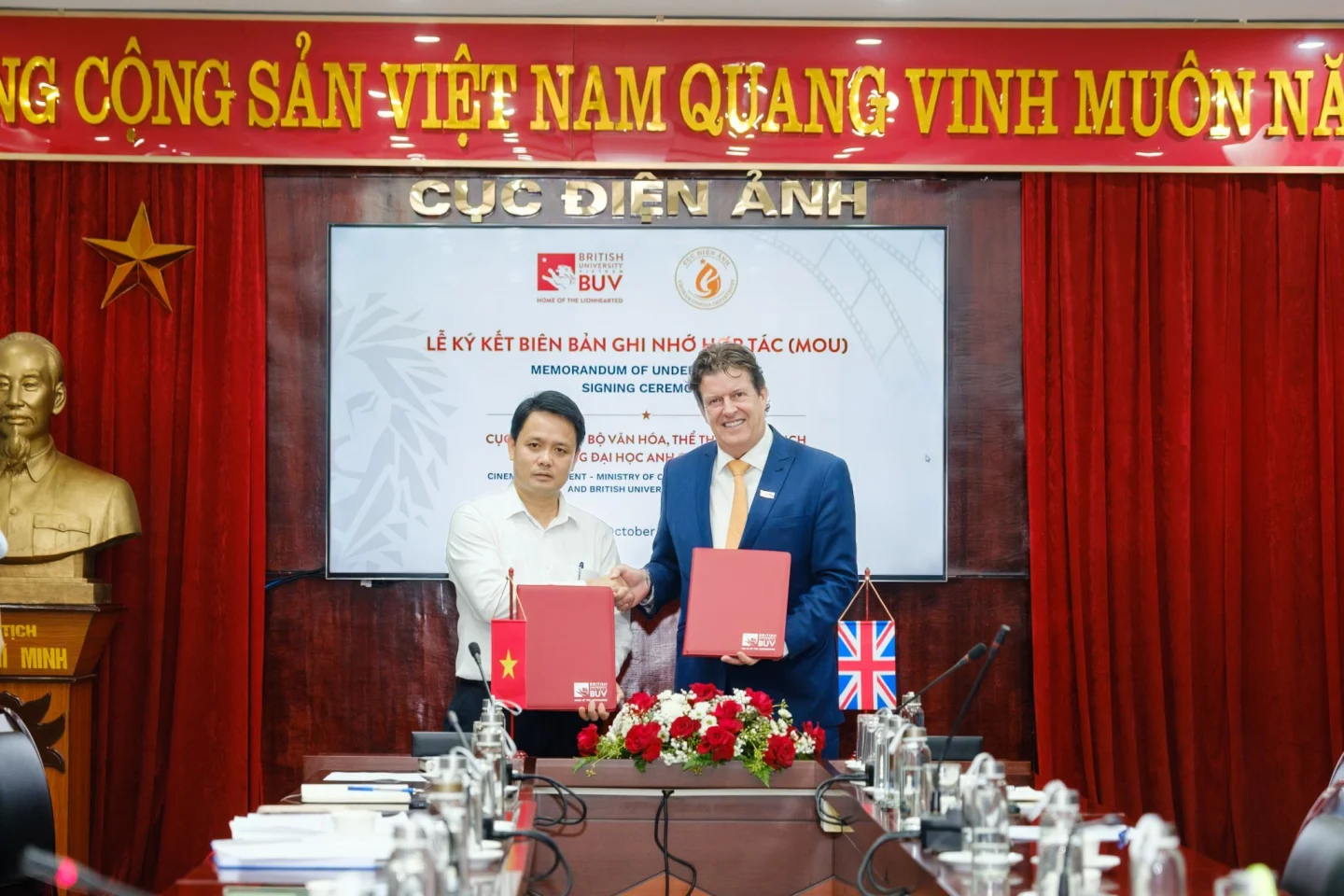
British University Vietnam (BUV) and the Vietnam Cinema Department officially signed a Memorandum of Understanding (MoU) to promote talent development, practical learning and professional engagement in Vietnam's film industry.
The signing ceremony took place in Hanoi, with the agreement signed by Mr Dang Tran Cuong, Director of the Vietnam Cinema Department, and Professor Rick Bennett, Deputy Vice-Chancellor and Vice-President of BUV.
The partnership establishes a framework for cooperation between the two institutions, with a shared ambition to develop a highly skilled workforce for Vietnam's film and wider creative industries. It also reflects BUV's commitment to connecting international higher education with the evolving needs of Vietnam's economy, enabling students to gain practical experience alongside their academic studies.
Strengthening the Connection Between Education and Industry
As Vietnam continues to develop its cultural and creative industries, preparing professionals with both creative expertise and practical industry capabilities has become increasingly important.
Film production requires a combination of artistic vision, technical knowledge, project management and collaboration across multiple disciplines. Beyond developing creative ideas, aspiring filmmakers and media professionals need an understanding of the industry's professional standards, production processes and working environments.
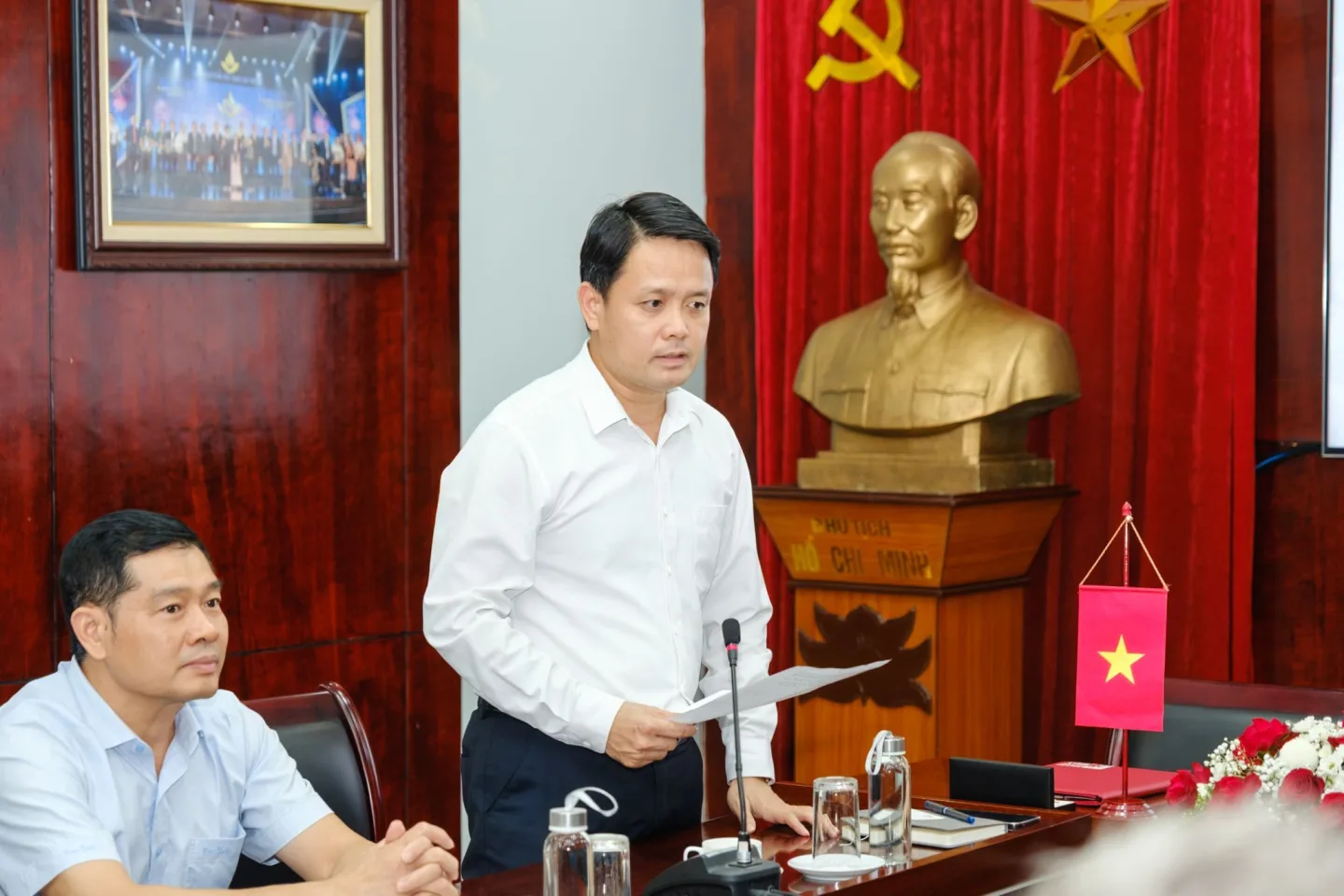
Speaking at the ceremony, Mr Dang Tran Cuong emphasised that human resource development is a fundamental pillar of the film industry's growth. He highlighted the importance of closer cooperation between educational institutions, state management agencies and industry organisations to better prepare young professionals for the sector's evolving requirements.
As Vietnam's state management authority for cinema, the Vietnam Cinema Department brings valuable professional expertise and industry connections to the partnership. Through its network, the Department can facilitate exchanges with filmmakers, production companies, distributors and other industry practitioners, offering students greater exposure to the realities of professional filmmaking.
Professor Rick Bennett reaffirmed BUV's commitment to translating the agreement into meaningful collaborative activities. He emphasised that partnerships between universities, public institutions and industry are essential to developing professional talent and expanding career opportunities for students.
The collaboration also recognises the increasingly interdisciplinary nature of creative careers. Film intersects with communication, graphic design, illustration, animation, event management and digital media, creating opportunities for students across different disciplines to contribute to the industry's development.
Creating Practical Learning and Professional Development Opportunities
Under the MoU, BUV and the Vietnam Cinema Department will work together to develop activities that strengthen students' professional knowledge, practical experience and career readiness.
Key areas of cooperation include:
Practical experience and industry exposure: Facilitating opportunities for students to explore professional working environments, understand industry workflows and apply academic knowledge to relevant activities and assignments.
Professional exchanges and networking: Coordinating seminars, workshops, industry talks and professional exchanges, connecting students with filmmakers, production specialists and industry experts who can share practical knowledge and career insights.
Creative development and interdisciplinary collaboration: Exploring opportunities for students to apply their capabilities through filmmaking, audiovisual production and related creative activities, while encouraging cooperation across different creative disciplines.
Career readiness and long-term cooperation: Strengthening students' technical, professional and interpersonal capabilities, while establishing mechanisms for continued coordination, information sharing and evaluation of collaborative activities.
One potential opportunity discussed at the ceremony was student participation in the upcoming Hanoi International Film Festival, scheduled for 28 November to 2 December 2026.
The Vietnam Cinema Department expressed its intention to coordinate with BUV to create opportunities for students to engage with festival activities and connect with filmmakers, producers, directors and other professionals.
The two institutions also discussed opportunities for professional consultation in curriculum development, helping ensure that educational programmes remain informed by industry practice and emerging professional requirements.
To support implementation, BUV and the Department will work towards coordinated activity plans that reflect the strengths, priorities and operational schedules of both institutions.
Supporting the Next Generation of Creative Professionals at BUV
The partnership holds particular relevance for students at BUV's School of Communications and Creative Industries, including those pursuing Film & Media Production and related creative disciplines.
Through its emphasis on creative practice and industry-oriented learning, SoCCI aims to prepare students to move confidently between academic study and professional environments, developing the creative, technical and collaborative capabilities required in contemporary media industries.
The agreement creates a new platform through which students may engage with the wider film ecosystem, gain insight into professional production processes and explore career opportunities beyond the classroom.
Such experiences can be particularly valuable in creative disciplines, where professional readiness involves more than technical proficiency. Students must also learn to interpret creative briefs, collaborate with different specialists, manage production requirements, respond to feedback and deliver work in real-world conditions.
By bringing students closer to industry practitioners and professional environments, BUV seeks to make these capabilities an integral part of their educational development.
The collaboration also reinforces BUV's broader approach to employability: combining academic knowledge with relevant professional experience, industry engagement and opportunities for students to demonstrate their capabilities.